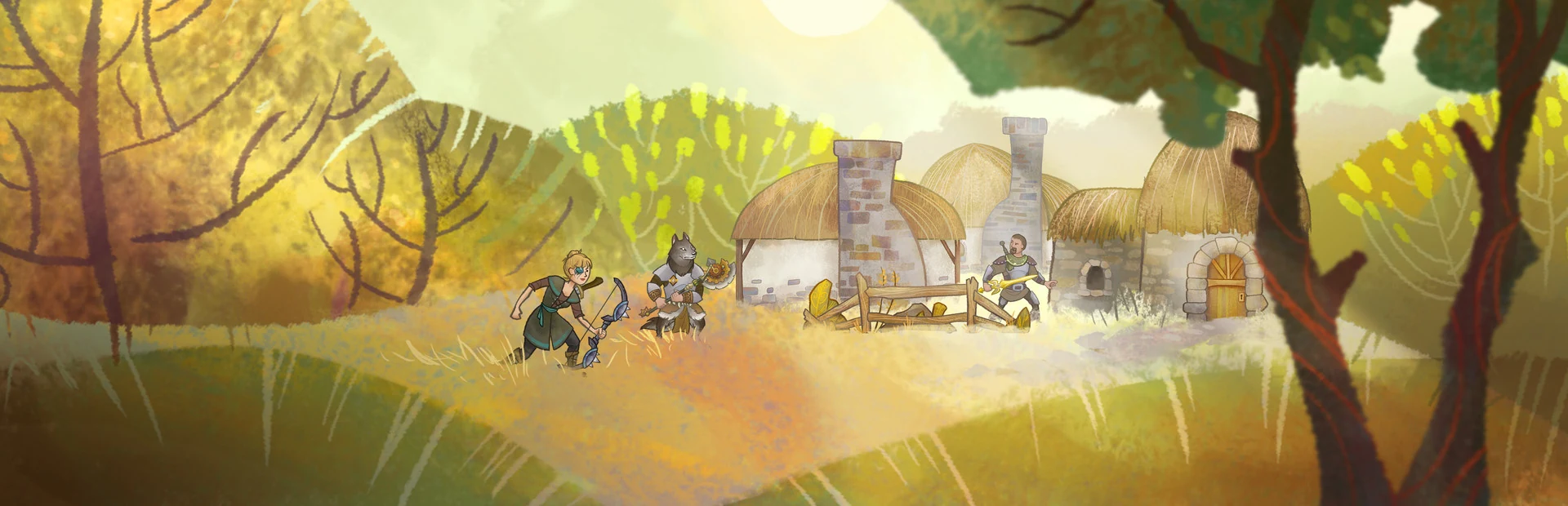
A QUESTLARK CHAPTER
Wildermyth
A rewarding home for consequential character events, where a surprising decision can become the defining memory of a hero.
Game facts
- Developer
- Worldwalker Games LLC
- Publisher
- Worldwalker Games LLC, WhisperGames
- Released
- 15 June 2021
- Platforms
- Windows · macOS · Linux (Steam edition)
- Model
- Paid game
- PEGI
- 12 — Nintendo Switch Console Edition edition; not a separate PC classification
- Players
- Single-player · Multi-player · Co-op · Online Co-op
- Length
- Long
- Difficulty
- 2 / 5 · Moderate
- Steam Deck
- Verified
PEGI source ↗ · Steam Deck status source ↗
Edition: Base game
The score, explained
The interest and responsiveness of the core decisions and actions.
How progression, exploration and goals fit together.
The coherence of the visual, musical and narrative presentation.
How clearly the game explains its rules and offers useful ways to engage.
The depth of optional goals, alternative approaches and reasons to return.
An unexpected event can redirect a familiar hero
Wildermyth makes a campaign's choices personal by attaching them to characters who already have a place in the party. An encounter can invite a transformation, change a relationship or alter how a hero is understood, making the decision more interesting than a comparison of immediate rewards. The person involved may be someone who has survived difficult battles or developed a rivalry with another companion. That history changes the player's willingness to accept a risk. Quest Lark values this connection between choice and attachment. A procedurally assembled event can still feel specific when it arrives at the right point in a character's life. The decision becomes a question about what kind of future you are willing to imagine for this particular person.
The party carries decisions into battle
Changes produced by events are not confined to a journal entry. A transformation can alter a hero's abilities, and relationships can influence how companions support one another during tactical encounters. This gives a story choice a practical afterlife. The next fight may require adapting a familiar strategy around someone who is no longer quite the same fighter. Ageing adds another important limit: campaigns extend through time, so not every valued arrangement can be preserved indefinitely. The legacy system provides continuity while allowing new adventures to place familiar heroes in different situations. These connections make the game effective at producing memories. A player may remember an unusual ability because of the event that introduced it, and remember the event because that ability later helped the party survive a difficult encounter.
The structure sometimes shows through the character
The event pool means that scenes can recur with different people, and not every combination will feel equally natural. Players who want highly specific dialogue continuity may notice moments where the character seems to be fitting a scene rather than generating it. The tactical layer also requires substantial attention between decisions, so this is not a conversation game with occasional decorative battles. Its strongest stories depend on the player connecting events across the campaign and caring about the party enough to supply some continuity. That collaboration can be satisfying, but it is a real part of the recommendation. If repeated event structures make a character feel less individual to you, the mechanical consequences alone may not provide the emotional weight needed to sustain a long campaign.
Choose the account that becomes your party's own
Wildermyth is a strong choice for readers who like discussing the strange things that happened to their group rather than comparing one fixed sequence of plot revelations. A decision may be strategically imperfect and still become the event that defines a hero in memory. The campaign gives room for that kind of attachment, while the tactical battles ensure that consequences remain practical as well as descriptive. It suits players who can enjoy uncertainty and accept that a party's identity will change over time. A tightly authored drama will be a better fit for someone who wants every line to develop a single controlled character arc. Here, the pleasure lies in recognising that a series of separate choices has gradually created a company you would describe differently from anyone else's.
The verdict
A rewarding home for consequential character events, where a surprising decision can become the defining memory of a hero.
Reasons to play
- Events connect choice to existing attachment
- Transformations carry decisions into combat
- Legacy gives selected heroes continuity
Reasons to think twice
- Some scenes expose their reusable structure
- Tactical play remains a substantial commitment
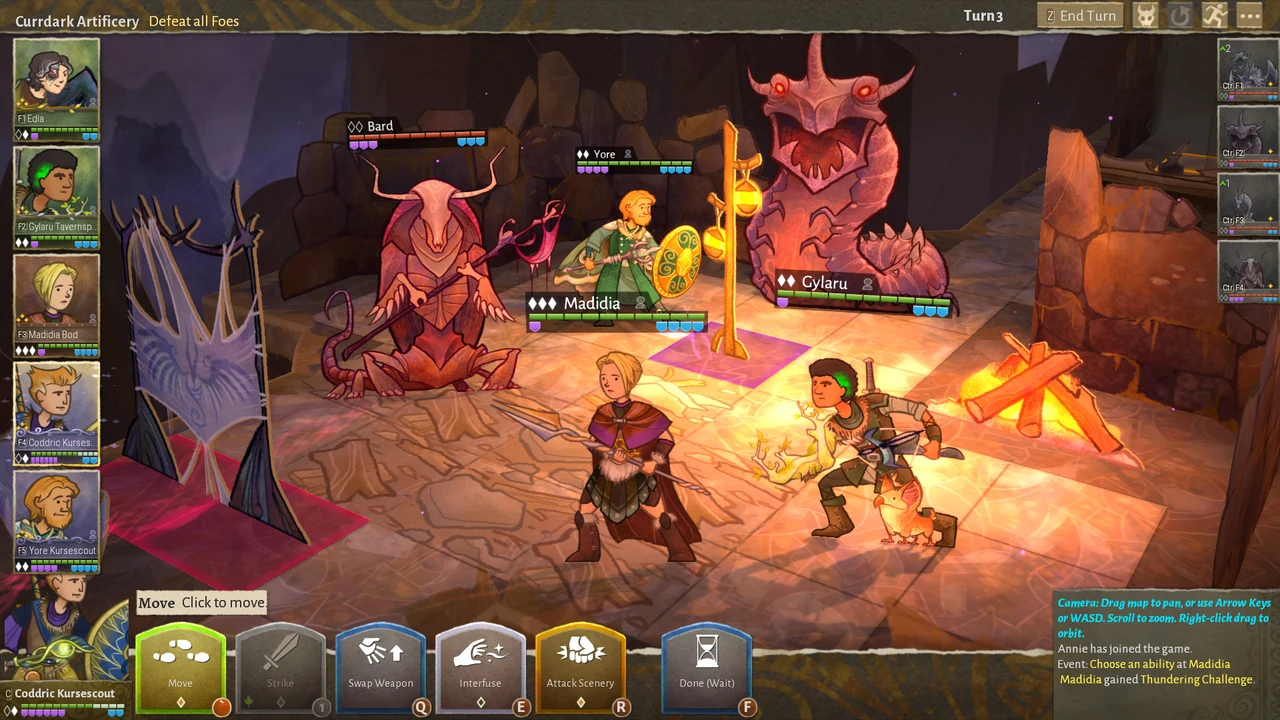
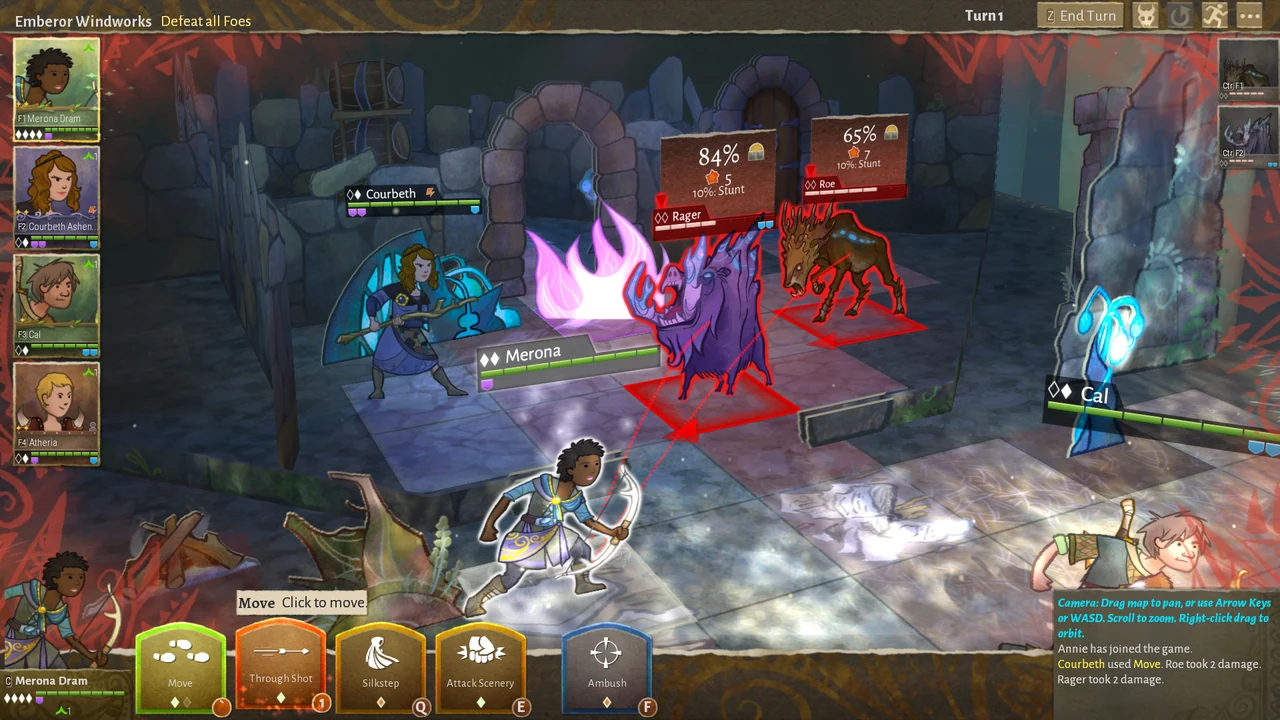
See the game
Assist & accessibility
Explore the available settings and control options on the official game page before choosing your setup.
Parents’ guide
Players: Single-player · Multi-player · Co-op · Online Co-op. No in-game purchase marker in the checked Steam listing. Separate downloadable content may be sold.
Age classification: 12. Nintendo Switch Console Edition edition; not a separate PC classification
A useful starting tip
Consider how an ability supports the whole party's positioning, not just the damage one hero can deal alone.
A different direction
Compare this with Sea of Stars: Sunset Edition: A welcoming authored journey for players who find meaning in supporting a party, even without extensive control over its plot.
Official sources
Reviewed: November 2026
You might also like
 Katana ZERORead review →
 PentimentRead review →
 Chants of SennaarRead review →