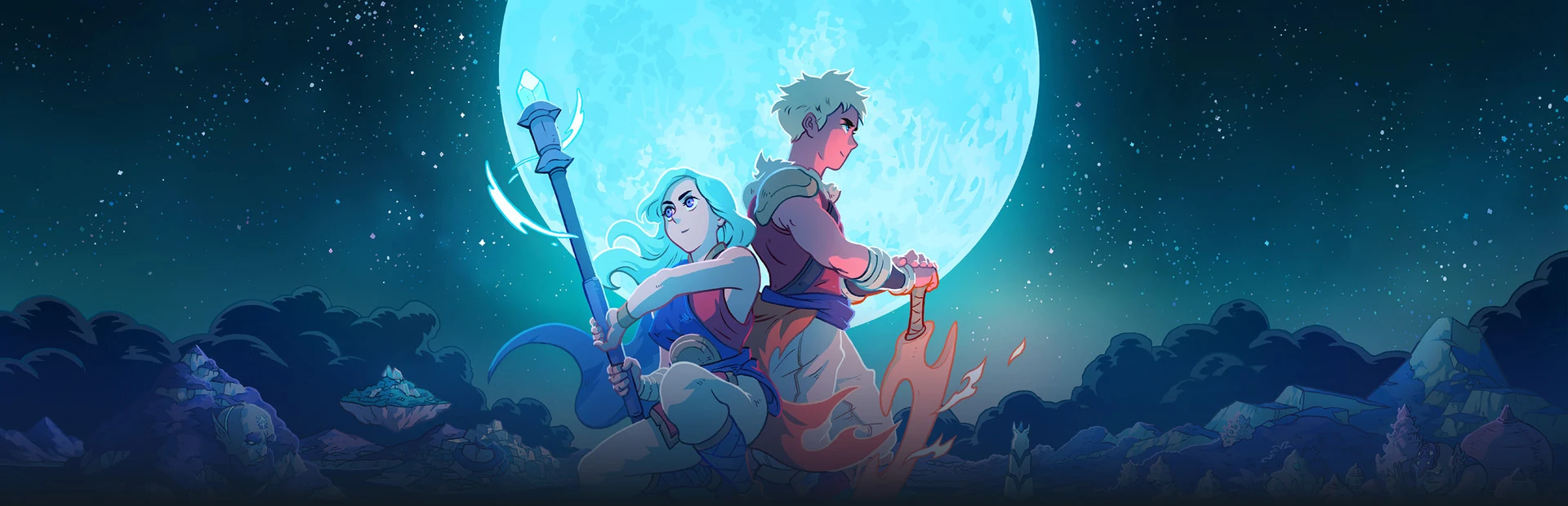
A QUESTLARK CHAPTER
Sea of Stars: Sunset Edition
A welcoming authored journey for players who find meaning in supporting a party, even without extensive control over its plot.
Game facts
- Developer
- Sabotage Studio
- Publisher
- Sabotage Studio
- Released
- 28 August 2023
- Platforms
- Windows (Steam edition)
- Model
- Paid game
- PEGI
- 7 · Violence, Fear — Steam UK listing
- Players
- Single-player · Multi-player · Co-op · Shared/Split Screen Co-op
- Length
- Long
- Difficulty
- 2 / 5 · Moderate
- Steam Deck
- Verified
PEGI source ↗ · Steam Deck status source ↗
Edition: Base game
The score, explained
The interest and responsiveness of the core decisions and actions.
How progression, exploration and goals fit together.
The coherence of the visual, musical and narrative presentation.
How clearly the game explains its rules and offers useful ways to engage.
The depth of optional goals, alternative approaches and reasons to return.
An authored journey still asks for commitment
Sea of Stars follows a defined party and central adventure, so its choices are less about rewriting the plot than about how the player inhabits the journey. Valere and Zale have responsibilities as Solstice Warriors, while companions such as Garl give those responsibilities a more personal setting. The game asks you to care about a group whose direction is largely authored, then participate through exploration and combat. Quest Lark includes it as a useful distinction within a narrative selection. Agency can come from supporting a party and learning its strengths even when the main story does not split into radically different versions. The opening works when the group's company is appealing enough that helping it through the next obstacle feels like a meaningful role in itself.
Small interactions give the world a welcoming rhythm
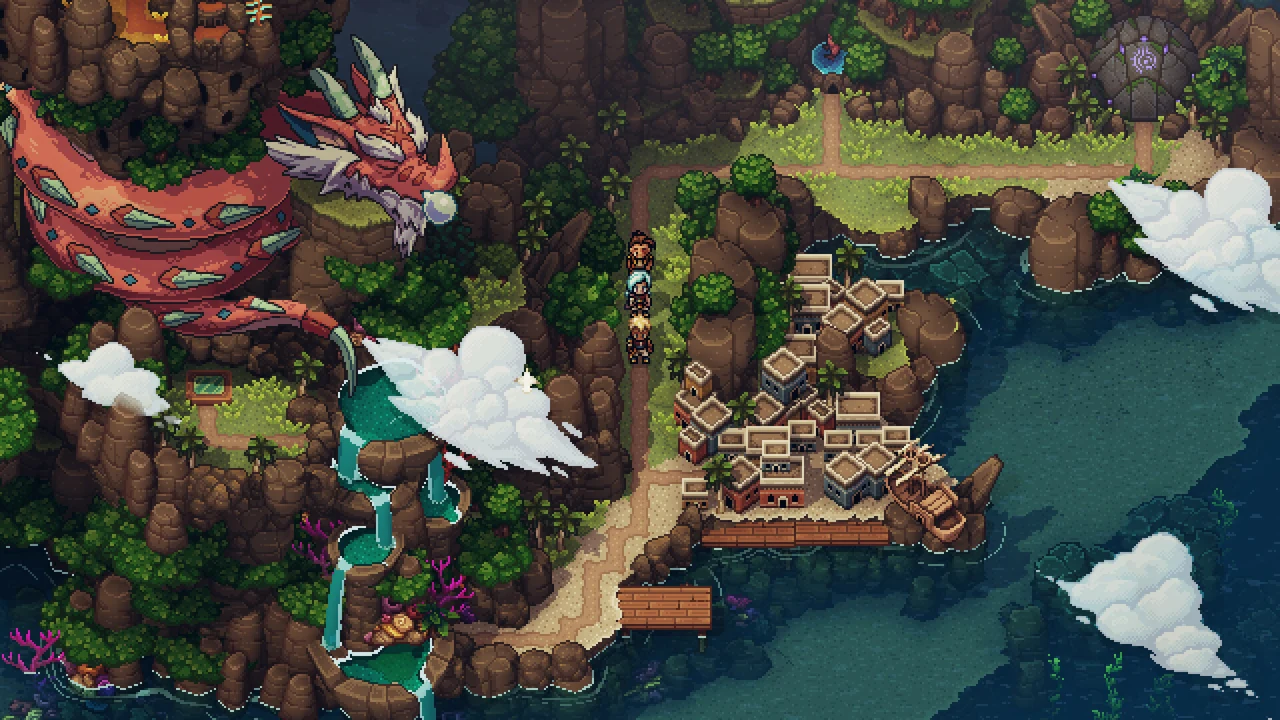
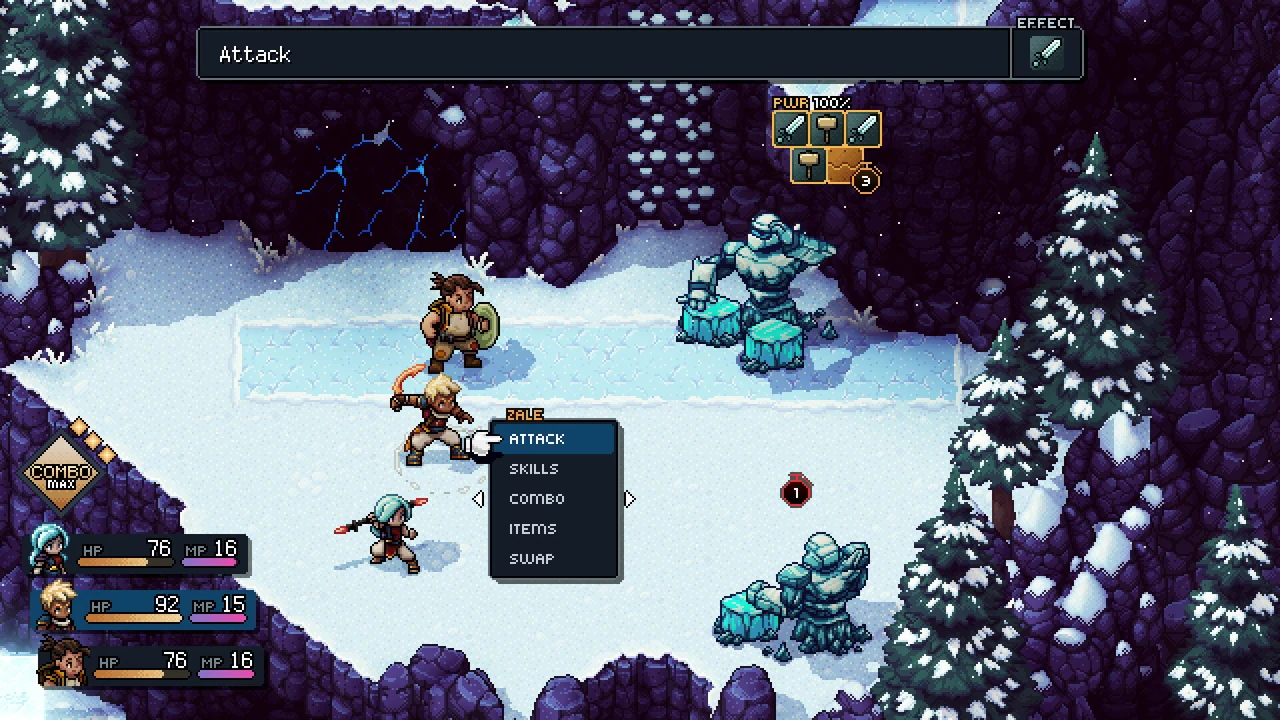
Traversal includes climbing, swimming and moving through environmental obstacles, making destinations more than static scenes between conversations. The turn-based battles add timing and enemy locks, encouraging the player to pay attention during actions instead of simply issuing commands and waiting. Party combinations reinforce the sense of cooperation. Optional activities and conversations then provide opportunities to spend more time in the world without changing the broad direction of the plot. These are modest forms of participation, but they help make the journey feel lived rather than merely observed. The game's best quality is its consistency of tone across those interactions. Detailed environments and expressive animation make even a simple movement or pause at camp feel like part of the same inviting adventure.
Do not mistake warmth for narrative flexibility
Players looking for difficult dialogue decisions, extensive role customisation or a wide range of endings should choose a different kind of RPG. Sea of Stars is built around following its cast through a story, and the writing often expresses feelings directly. That approach can be engaging without offering the ambiguity or moral tension of more reactive adventures. Combat also remains a regular requirement, so interest in the characters needs to coexist with enjoyment of the battle rhythm. Some sections may feel familiar once the pattern of travel, encounter and revelation is established. The recommendation is strongest when you value a carefully presented shared journey. It is weaker when the main attraction of narrative games is the ability to refuse a direction or substantially redefine the protagonist's priorities.
For a player who wants to travel with a party
Choose Sea of Stars when companionship, visual craft and accessible fantasy adventure matter more than branching authorship. The protagonists and their friends provide a clear emotional centre, while the active battle system gives the player a practical way to contribute. It is a good fit for someone who enjoys helping an established cast succeed and discovering the next illustrated destination along the route. The game's warmth also makes it a useful alternative to the darker, more uncertain stories in this selection. Readers wanting a primarily conversational experience should still account for the regular combat and exploration. Its value lies in making a directed journey pleasant to participate in: the player does not need to control every major event for the small acts of travelling together to feel worthwhile.
The verdict
A welcoming authored journey for players who find meaning in supporting a party, even without extensive control over its plot.
Reasons to play
- Party combinations make participation practical
- Traversal gives places a physical rhythm
- A warm cast supports the directed adventure
Reasons to think twice
- Limited branching restricts narrative authorship
- Regular battles require more than interest in dialogue
See the game
Assist & accessibility
Explore the available settings and control options on the official game page before choosing your setup.
Parents’ guide
Players: Single-player · Multi-player · Co-op · Shared/Split Screen Co-op. No in-game purchase marker in the checked Steam listing. Separate downloadable content may be sold.
Age classification: 7. Violence · Fear Steam UK listing
A useful starting tip
Match damage types to an enemy's visible locks before spending a turn only on the largest available attack.
A different direction
Compare this with Wildermyth: A rewarding home for consequential character events, where a surprising decision can become the defining memory of a hero.
Official sources
Reviewed: November 2026
You might also like
 Katana ZERORead review →
 PentimentRead review →
 WildermythRead review →