A QUESTLARK CHAPTER
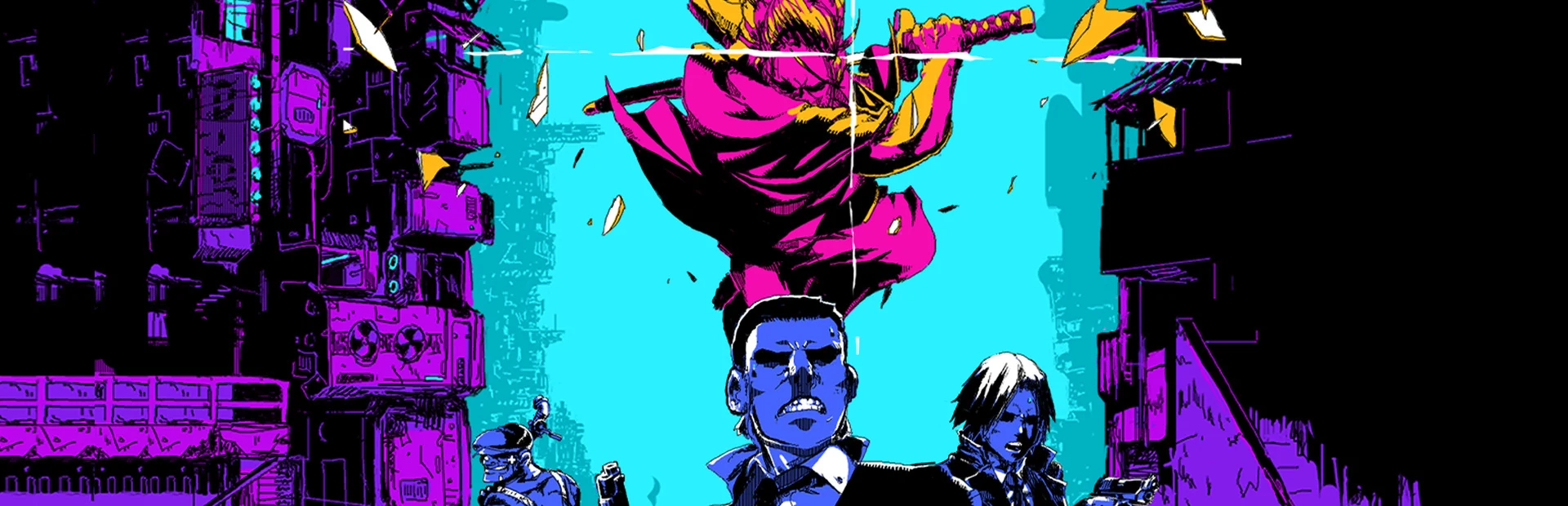
Katana ZERO
A tense, concentrated story that makes the timing of a response part of how a character expresses resistance or restraint.
Game facts
- Developer
- Askiisoft
- Publisher
- Devolver Digital
- Released
- 18 April 2019
- Platforms
- Windows · macOS (Steam edition)
- Model
- Paid game
- PEGI
- 16 — Nintendo Switch download edition edition; not a separate PC classification
- Players
- Single-player
- Length
- Short
- Difficulty
- 4 / 5 · Demanding
- Steam Deck
- Verified
PEGI source ↗ · Steam Deck status source ↗
Edition: Base game
The score, explained
The interest and responsiveness of the core decisions and actions.
How progression, exploration and goals fit together.
The coherence of the visual, musical and narrative presentation.
How clearly the game explains its rules and offers useful ways to engage.
The depth of optional goals, alternative approaches and reasons to return.
The next answer can be an interruption
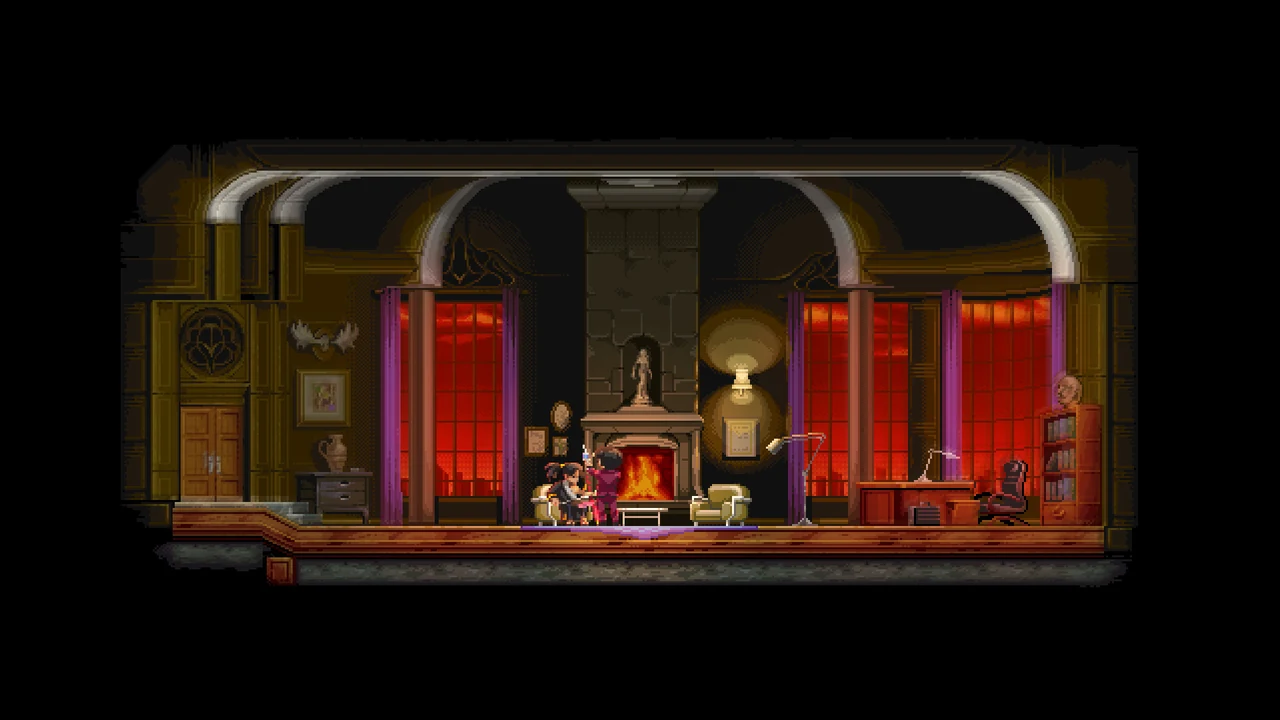
Katana ZERO makes dialogue unusually sensitive to how the player enters a conversation. Responses appear with a sense of timing, allowing an impatient interruption or a more restrained answer to change the immediate exchange. That gives the protagonist a presence beyond the words chosen on screen. The surrounding mystery makes this especially effective, because conversations with people such as the therapist occur under conditions of mistrust and incomplete knowledge. Quest Lark's interest is in those local decisions. The game does not need every answer to create a separate campaign for speaking to feel consequential. A reply can express resistance, aggression or caution within a scene, making the player consider the social effect of an action as well as its informational value.
Control feels different inside and outside a room
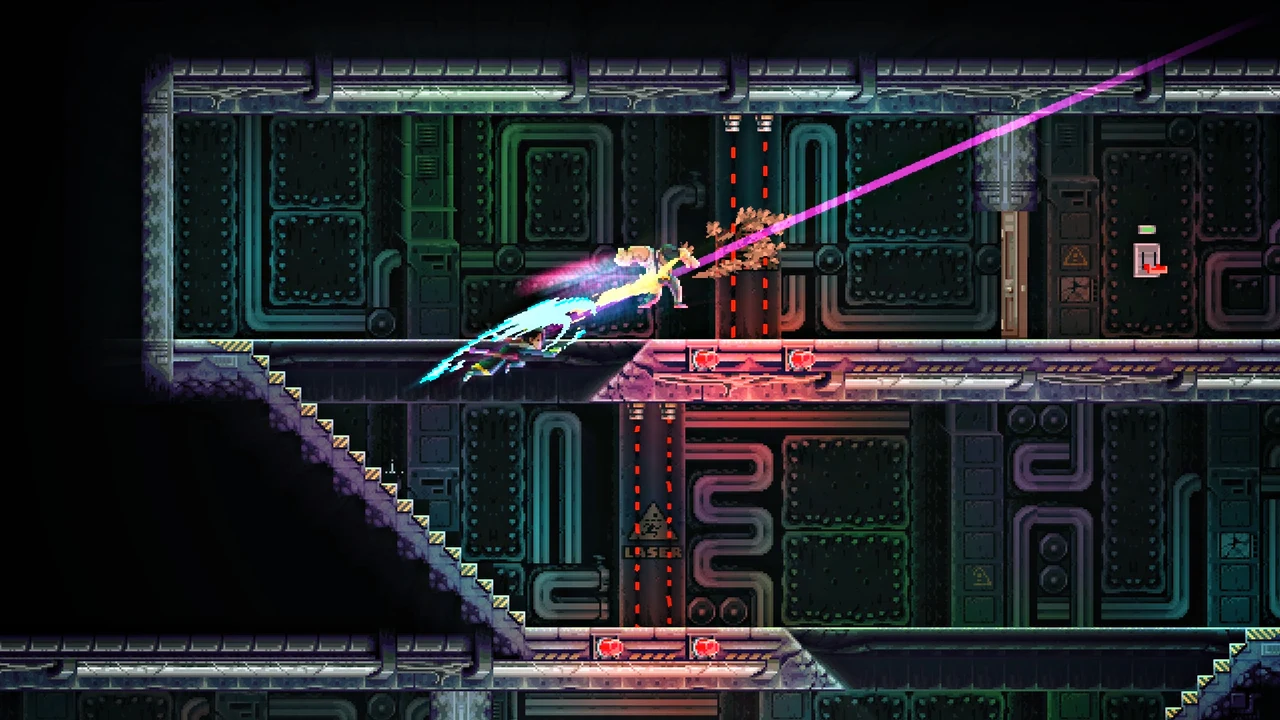
The action sequences invite precise revision. A failed approach can be tried again with another movement, throw or strike until the room unfolds in a satisfying sequence. Conversations offer a less comfortable kind of control, because the meaning of an answer depends on people and circumstances the protagonist may not fully understand. That contrast gives the game's choices their tension. The player can become highly competent at carrying out an assignment while feeling less certain about accepting the account surrounding it. The visual style and music reinforce the difference between momentum and unease. It is a strong design for readers interested in agency as a feeling: confidence in one activity does not necessarily make the character free, informed or secure in the wider situation.
Expect sharp consequences rather than a broad life simulator
Katana ZERO concentrates on particular exchanges and revelations instead of offering a large social world to manage. Its violent encounters are unavoidable parts of the experience, and the story maintains a disturbing tone around memory and manipulation. Some questions remain unsettled, which can be intriguing but also means the ending should not be approached as a promise to clarify every earlier uncertainty. The dialogue decisions are best understood within that concentrated structure. Players seeking a large network of lasting relationships or a peaceful story with many leisurely conversations will find a narrower and more abrasive game. Its appeal depends on enjoying the pressure of an immediate response and the possibility that understanding the response fully may only become possible after a later discovery changes the scene's context.
Choose it for the friction between action and intention
This is a strong recommendation when you want a short, forceful story in which the manner of speaking can matter as much as the nominal choice. The dialogue system makes impatience physically easy to express, while the wider mystery gives restraint a reason to feel valuable. Pair that with tightly constructed action and the result has a distinctive sense of urgency. It suits players who enjoy interpreting uncomfortable scenes and can accept that some of their meaning remains open. A more expansive choice-driven RPG will suit anyone seeking control over a whole life or community. Katana ZERO instead makes a few immediate decisions feel tense by placing them inside a situation where the protagonist's knowledge, motives and freedom are all difficult to take for granted.
The verdict
A tense, concentrated story that makes the timing of a response part of how a character expresses resistance or restraint.
Reasons to play
- Interruptions make dialogue physically expressive
- Uncertainty gives restrained answers weight
- Action and conversation create contrasting control
Reasons to think twice
- Local choices sit within an authored story
- Violence and unresolved tension define the mood
See the game
Assist & accessibility
Explore the available settings and control options on the official game page before choosing your setup.
Parents’ guide
Players: Single-player. No in-game purchase marker in the checked Steam listing. Separate downloadable content may be sold.
Age classification: 16. Nintendo Switch download edition edition; not a separate PC classification
A useful starting tip
Plan the order of threats before entering a room, then revise one part of the sequence when an attempt reveals a better opening.
A different direction
Compare this with Chants of Sennaar: A thoughtful interpretation game that makes reconsidering an assumption about another community feel like meaningful progress.
Official sources
Reviewed: November 2026
You might also like
 PentimentRead review →
 WildermythRead review →
 Chants of SennaarRead review →