
A QUESTLARK CHAPTER
GRIS
A focused option for reflective participation, inviting personal interpretation through movement instead of conversational decisions.
Game facts
- Developer
- Nomada Studio
- Publisher
- Devolver Digital
- Released
- 13 December 2018
- Platforms
- Windows · macOS (Steam edition)
- Model
- Paid game
- PEGI
- 7 — Nintendo Switch edition; not a separate PC classification
- Players
- Single-player
- Length
- Short
- Difficulty
- 2 / 5 · Approachable
- Steam Deck
- Verified
PEGI source ↗ · Steam Deck status source ↗
Edition: Base game
The score, explained
The interest and responsiveness of the core decisions and actions.
How progression, exploration and goals fit together.
The coherence of the visual, musical and narrative presentation.
How clearly the game explains its rules and offers useful ways to engage.
The depth of optional goals, alternative approaches and reasons to return.
Participation without a dialogue menu
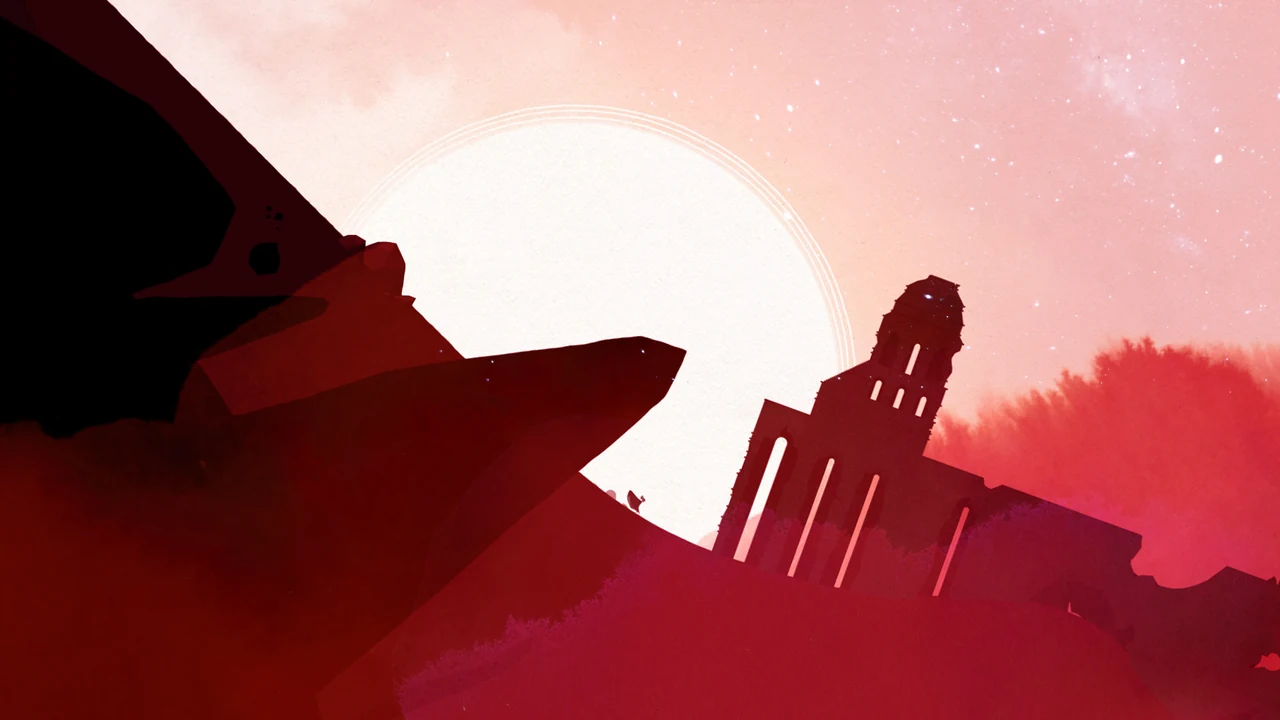
GRIS offers a useful reminder that a narrative game can involve the player without asking for spoken choices. Its young protagonist moves through a symbolic landscape whose changing colour and form suggest an emotional process. The player participates by continuing, exploring and learning how to move within that landscape. Quest Lark values the distinction between controlling events and interpreting an experience. The broad journey is directed, but the meaning attached to a particular image or pause remains personal. An obstacle can be understood as a practical platforming task and as part of a larger emotional movement. The opening is strongest when approached with that openness, allowing sound, space and motion to establish a relationship before demanding a precise explanation of what every element represents.
The pace leaves room to notice
The game regularly makes the character small within a large composition, inviting attention to scale and atmosphere as well as to the next platform. New abilities change how the world can be crossed, giving progress a physical quality that supports the visual development. Optional discoveries provide a reason to look beyond the most obvious route without requiring a large checklist of quests. The absence of conventional combat keeps the central activity close to movement and observation. Those choices make the experience particularly suitable for a player who wants space to reflect while remaining involved. The interaction is not complex in the manner of a strategy game, but it is purposeful: the act of finding a way forward helps give the images a temporal and personal dimension.
Interpretation needs enough substance to connect with
The protagonist's circumstances are expressed indirectly, and the game provides limited concrete detail about her life. That can make the story broadly resonant, but it can also make it difficult for some players to form a specific attachment. Someone who prefers characters revealed through relationships and difficult conversations may find the symbolism too general. The puzzles and platforming are similarly restrained, supporting the journey rather than becoming a deep mechanical challenge. These qualities should be understood before choosing it for a narrative-focused evening. GRIS offers an expressive experience with room for interpretation, not a large collection of consequential decisions. Its emotional effect depends on whether the presentation and movement can carry enough meaning for you without the more explicit framework of a spoken or written account.
An option for reflection rather than argument
Choose GRIS when you want a story game that gives attention to mood and change without filling every moment with dialogue. It is particularly suitable as a contrast to adventures that ask the player to manage several people, systems and competing obligations at once. The focused journey makes its visual developments easy to follow, while the music helps connect scenes into a coherent emotional arc. Readers seeking substantial branching or a strongly specified character history should choose another title in the selection. The appeal here is quieter: moving through an experience, noticing what changes and deciding how to understand the relationship between those changes. That interpretive role can be meaningful even though the player is not selecting a different plot outcome at each stage.
The verdict
A focused option for reflective participation, inviting personal interpretation through movement instead of conversational decisions.
Reasons to play
- Quiet pacing leaves room to notice
- Abilities connect action to emotional change
- A directed journey supports open interpretation
Reasons to think twice
- Character circumstances remain indirect
- Branching and mechanical depth are limited
See the game

Assist & accessibility
Explore the available settings and control options on the official game page before choosing your setup.
Parents’ guide
Players: Single-player. No in-game purchase marker in the checked Steam listing. Separate downloadable content may be sold.
Age classification: 7. Nintendo Switch edition; not a separate PC classification
A useful starting tip
When a new ability appears, look again at the shape and movement of the environment before searching for an explicit instruction.
A different direction
Compare this with Neva: A powerful example of care expressed through action, with growth changing what support between companions requires.
Official sources
Reviewed: November 2026
You might also like
 Katana ZERORead review →
 PentimentRead review →
 WildermythRead review →