A QUESTLARK CHAPTER
DREDGE
A compelling fit for practical narrative choices, with route, cargo and curiosity making each departure a small negotiation with risk.
Game facts
- Developer
- Black Salt Games
- Publisher
- Team17
- Released
- 30 March 2023
- Platforms
- Windows · macOS (Steam edition)
- Model
- Paid game
- PEGI
- 12 — Nintendo Switch download edition edition; not a separate PC classification
- Players
- Single-player
- Length
- Short
- Difficulty
- 2 / 5 · Moderate
- Steam Deck
- Verified
PEGI source ↗ · Steam Deck status source ↗
Edition: Base game
The score, explained
The interest and responsiveness of the core decisions and actions.
How progression, exploration and goals fit together.
The coherence of the visual, musical and narrative presentation.
How clearly the game explains its rules and offers useful ways to engage.
The depth of optional goals, alternative approaches and reasons to return.
Every departure contains a small temptation
Dredge gives the player a practical reason to leave port and several reasons to delay coming back. Fish, materials and unusual discoveries compete for attention as the boat moves among the islands. The choice to pursue another opportunity becomes more uncomfortable as the light changes and the safety of a familiar route becomes less certain. This is the game's strongest contribution to a decisions-focused catalogue. It makes risk feel like something the player elects to accept, not merely a scripted danger imposed at a dramatic moment. A modest plan can become an ambitious trip through a sequence of individually reasonable choices. The atmosphere gains force because the player can recognise the moment when curiosity began asking more of the boat than caution would have recommended.
Limited space forces a judgement of value
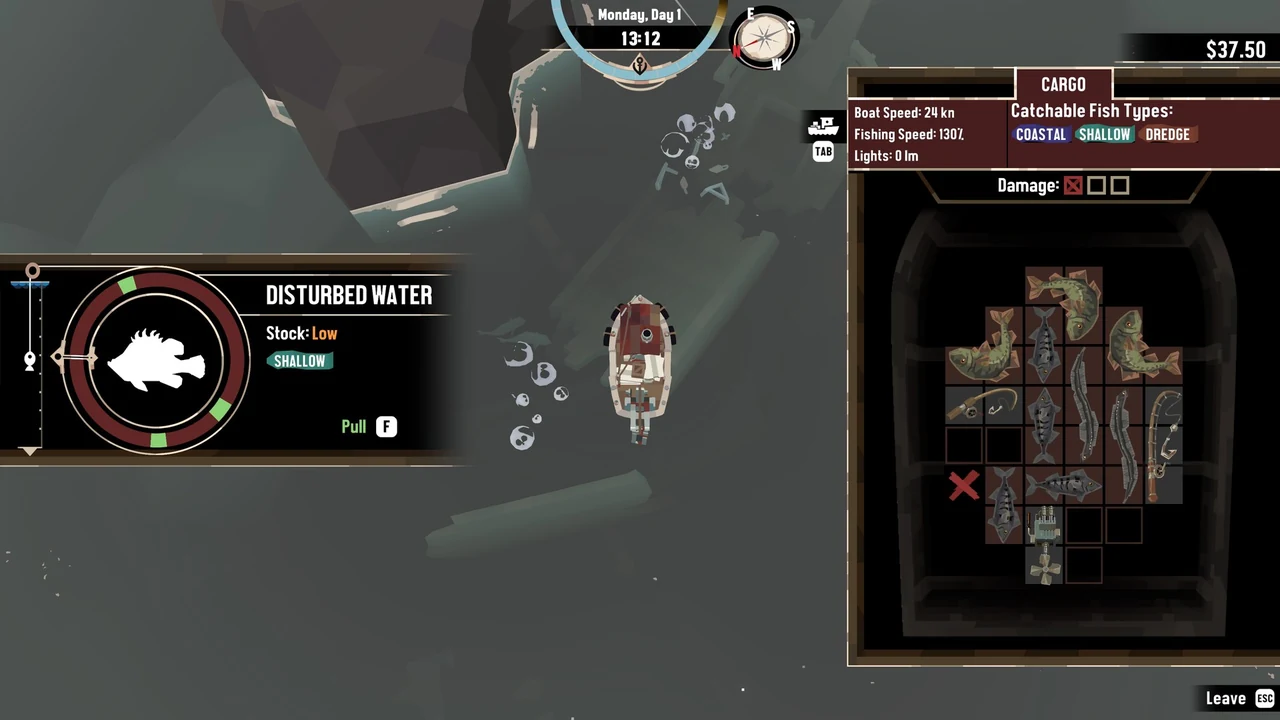
The cargo grid turns discoveries into a concrete problem of selection. A promising catch or piece of salvage may not fit comfortably alongside what is already aboard, requiring rearrangement or a decision about what to leave behind. Boat improvements expand possibilities, but they also encourage travelling farther and considering opportunities that would previously have seemed impractical. Requests from island residents add personal motives to those excursions. The game therefore connects narrative curiosity with everyday decisions about equipment, route and storage. A strange object matters partly because bringing it home required choosing it over something else. That is an effective way to make a mystery feel earned through practical participation, even when the wider plot follows a more directed course than the player's individual trips across the water.
The consequences are atmospheric more than conversational
Dredge gives relatively little sustained dialogue with a large cast, so readers seeking complex relationship management may find its human encounters brief. Its strongest decisions occur through navigation and resource use rather than through a menu of competing moral positions. The repeated fishing routine also needs to remain enjoyable for the mystery to retain momentum. A player who wants constant revelations may find the preparation between them too prominent, while someone seeking a relaxing maritime game should account for the disturbing imagery and threat. These qualities are intertwined. The quiet work makes the unease more effective, but it also means the story's pace depends on a willingness to perform ordinary tasks while wondering what the next unfamiliar request or catch might reveal about the surrounding islands.
Choose it for the decision to go a little farther
Dredge is a strong fit when you enjoy stories in which practical choices generate the mood. The question of whether to return is easy to understand, yet its answer changes with the cargo, route and level of confidence in the boat. That gives the player a personal relationship to an otherwise authored mystery. It is a more solitary experience than the party adventures in this selection, with the vessel serving as the consistent point of connection. Choose it for atmosphere, exploration and the tension between curiosity and caution. Readers wanting extensive dialogue branching should look elsewhere. The memorable decisions are smaller and more immediate: an extra stop, a risky crossing or an object kept aboard because leaving it behind would also mean abandoning the possibility of understanding it.
The verdict
A compelling fit for practical narrative choices, with route, cargo and curiosity making each departure a small negotiation with risk.
Reasons to play
- Returning to port is a meaningful decision
- Cargo space forces priorities
- Boat upgrades change the reach of curiosity
Reasons to think twice
- Conversations offer limited relationship development
- Repeated fishing controls the story's pace
See the game

Assist & accessibility
Parents’ guide
Players: Single-player. No in-game purchase marker in the checked Steam listing. Separate downloadable content may be sold.
Age classification: 12. Nintendo Switch download edition edition; not a separate PC classification
A useful starting tip
Decide what the next trip needs to achieve before leaving port, and reconsider that plan as darkness changes the risk.
A different direction
Compare this with Sable: A distinctive identity journey that gives a final choice meaning by letting preference grow through exploration and ordinary encounters.
Official sources
Reviewed: November 2026
You might also like
 Katana ZERORead review →
 PentimentRead review →
 WildermythRead review →