A QUESTLARK CHAPTER
Sable
A distinctive identity journey that gives a final choice meaning by letting preference grow through exploration and ordinary encounters.
Game facts
- Developer
- Shedworks
- Publisher
- Raw Fury
- Released
- 23 September 2021
- Platforms
- Windows (Steam edition)
- Model
- Paid game
- PEGI
- 3 — Xbox UK edition edition; not a separate PC classification
- Players
- Single-player
- Length
- Short
- Difficulty
- 1 / 5 · Approachable
- Steam Deck
- Verified
PEGI source ↗ · Steam Deck status source ↗
Edition: Base game
The score, explained
The interest and responsiveness of the core decisions and actions.
How progression, exploration and goals fit together.
The coherence of the visual, musical and narrative presentation.
How clearly the game explains its rules and offers useful ways to engage.
The depth of optional goals, alternative approaches and reasons to return.
An identity can begin as an open question
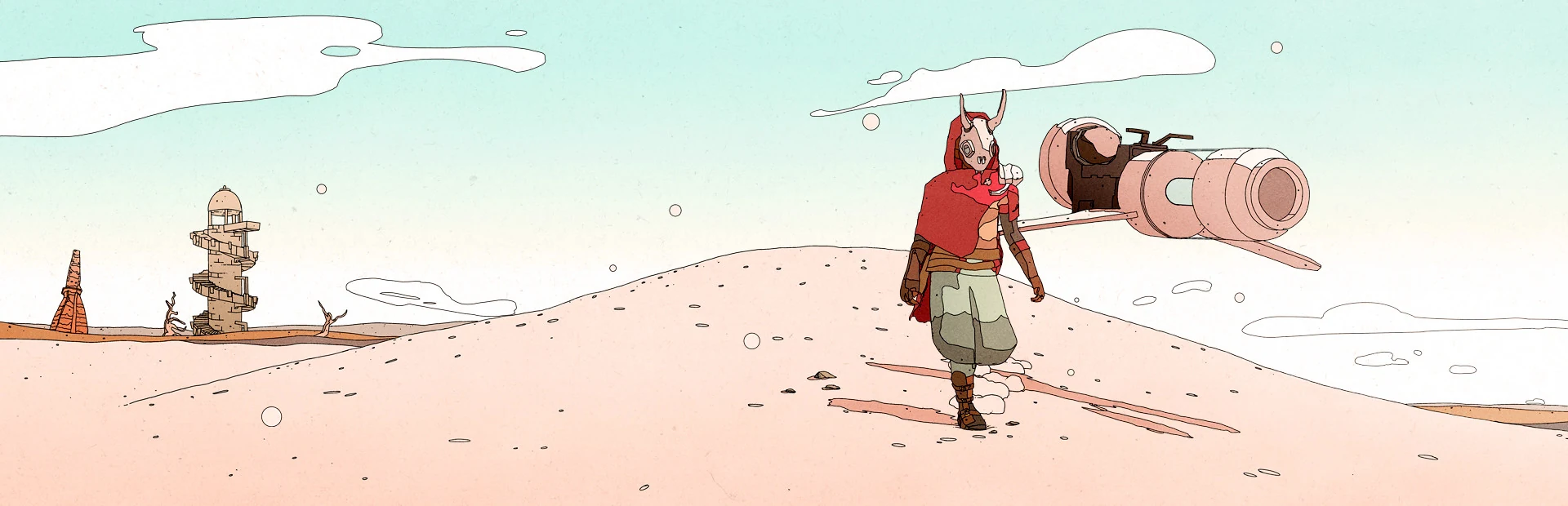
Sable frames its journey around the Gliding, a period of exploration before the protagonist chooses a mask and a role. That gives wandering a personal purpose without forcing every destination into an urgent crisis. Leaving the Ibexii opens a world in which different communities and occupations offer possible ways to live. The player is encouraged to investigate rather than immediately commit, making curiosity part of the character's development. This is an especially good fit for Quest Lark's interest in narrative choices. The central decision concerns identity, but the game gives that decision time to gather meaning. A mask becomes more than a reward icon when the player has spent time with the people, tasks and places that suggest what wearing it might represent.
Exploration supplies reasons for a preference
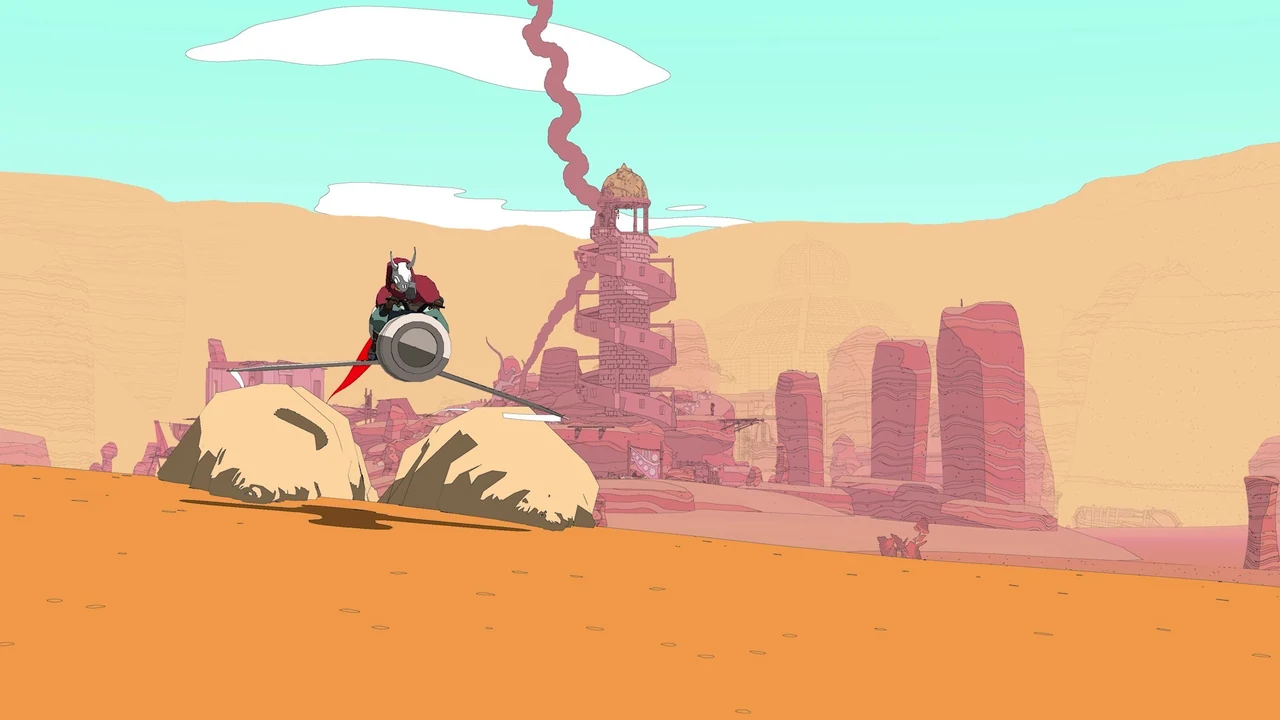
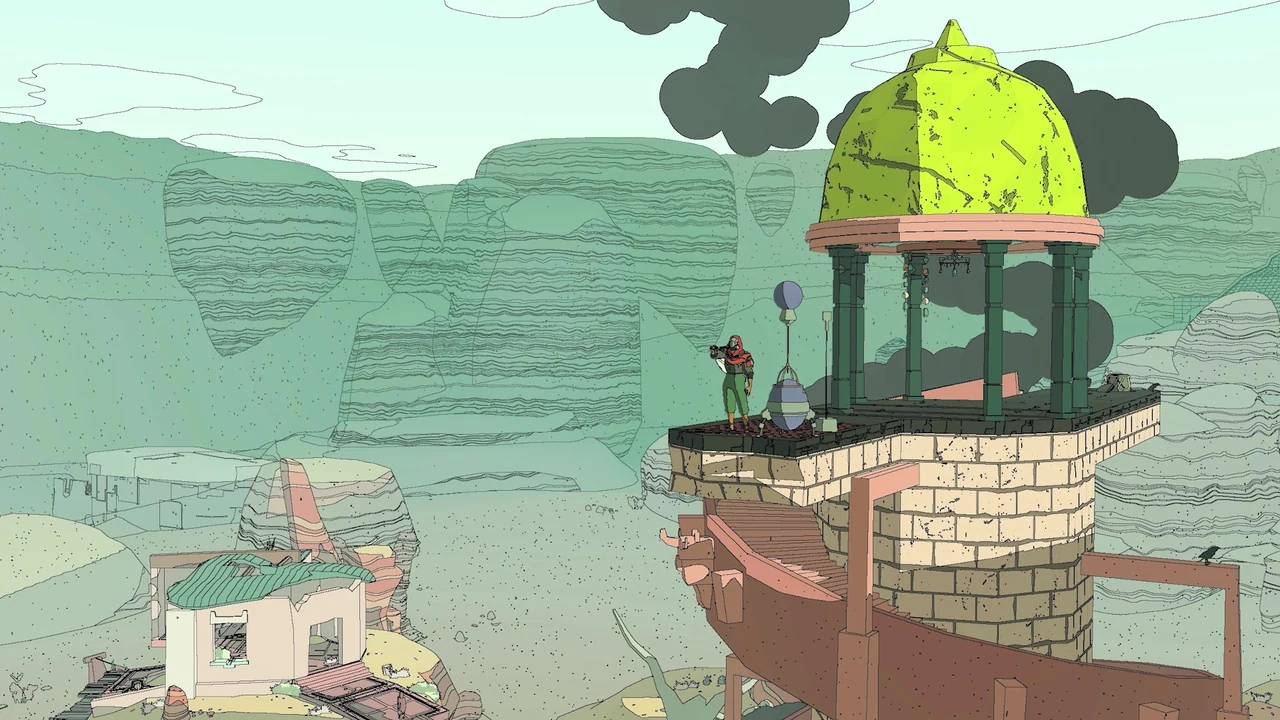
Climbing ruins, travelling by hoverbike and completing requests expose Sable to different forms of work and knowledge. Badges connect those experiences to potential masks, giving the exploration a light structure without turning it into a rigid sequence. The absence of conventional combat also changes the tone of meeting a new place. A settlement or ruin can be approached as an opportunity to learn rather than primarily as a source of enemies and loot. Conversations remain relatively concise, leaving the landscape and the player's chosen route to carry much of the experience. The game is strongest when a preference develops naturally from that route. A particular activity or community begins to feel like a possible home for Sable because the player has found a reason to linger there.
Freedom can become a lack of momentum
The open structure leaves substantial responsibility for direction with the player. If a new landmark or request does not generate curiosity, there is little combat pressure or urgent dramatic conflict to supply momentum instead. Traversal and navigation also ask for patience, and the game's technical presentation can feel uneven compared with the confidence of its visual style. Players seeking a densely reactive story should understand that choosing a route through the world does not produce unlimited conversation branches. The writing supports exploration more often than it drives a tightly paced plot. These qualities are closely connected to Sable's appeal. It is most rewarding when choosing where to go already feels meaningful, and less effective when a player wants the game to establish a strong external reason for every journey.
Choose a world in which to consider a role
Sable is a strong recommendation for players who enjoy exploration as a way of thinking about identity. The desert's striking visual language makes travelling appealing, while the Gliding gives those travels a coherent personal frame. It suits a reflective mood and a willingness to let preference develop through ordinary encounters rather than through dramatic declarations. Readers wanting frequent combat or an urgent plot will find more directed alternatives in this selection. The distinctive pleasure is arriving at a choice with a history behind it. By the time a mask can be selected, the player has had opportunities to associate possible roles with people and activities, making the decision feel like an expression of the journey rather than simply its final administrative step.
The verdict
A distinctive identity journey that gives a final choice meaning by letting preference grow through exploration and ordinary encounters.
Reasons to play
- The Gliding gives wandering a personal frame
- Masks connect roles to lived activities
- Combat-free exploration encourages curiosity
Reasons to think twice
- Open direction can weaken momentum
- Technical unevenness can interrupt traversal
See the game
Assist & accessibility
Explore the available settings and control options on the official game page before choosing your setup.
Parents’ guide
Players: Single-player. No in-game purchase marker in the checked Steam listing. Separate downloadable content may be sold.
Age classification: 3. Xbox UK edition edition; not a separate PC classification
A useful starting tip
Choose one visible landmark and investigate it fully before turning the whole desert into a list of competing destinations.
A different direction
Compare this with Katana ZERO: A tense, concentrated story that makes the timing of a response part of how a character expresses resistance or restraint.
Official sources
Reviewed: November 2026
You might also like
 Katana ZERORead review →
 PentimentRead review →
 WildermythRead review →