A QUESTLARK CHAPTER
Venba
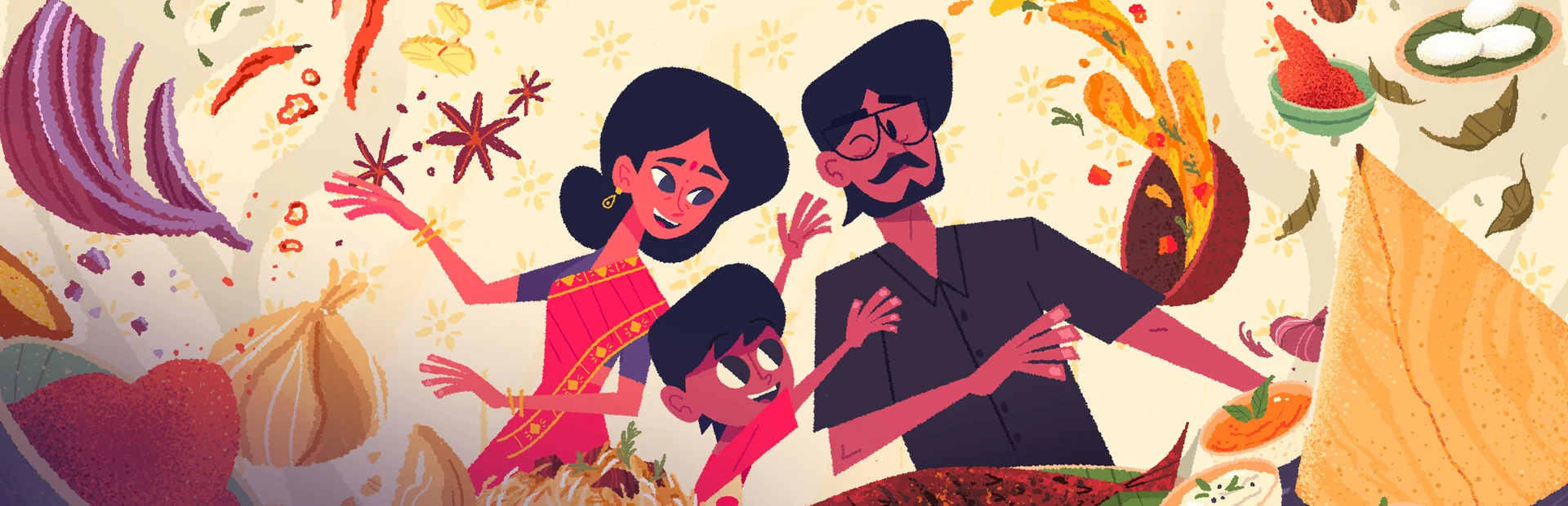
A compact cooking story that uses missing recipe instructions to explore family and cultural memory. Recovering recipes connects the cooking puzzles directly to a family's memory and changing circumstances.
Game facts
- Developer
- Visai Games
- Publisher
- Visai Games
- Released
- 31 July 2023
- Platforms
- Windows · macOS (Steam edition)
- Model
- Paid game
- PEGI
- 7 — Nintendo Switch edition; not a separate PC classification
- Players
- Single-player
- Length
- Short
- Difficulty
- 1 / 5 · Gentle
- Steam Deck
- Verified
PEGI source ↗ · Steam Deck status source ↗
Edition: Base game
The score, explained
The interest and responsiveness of the core decisions and actions.
How progression, exploration and goals fit together.
The coherence of the visual, musical and narrative presentation.
How clearly the game explains its rules and offers useful ways to engage.
The depth of optional goals, alternative approaches and reasons to return.
Recipes carry the family story
Venba follows a South Indian immigrant mother and her family, using food as a way to explore connection across generations. Its cooking puzzles begin with a damaged recipe book, so working out how to prepare a dish has a clear place inside the story. That is a more specific proposition than a general cooking game: the interest lies in what these meals mean to these people as well as how they are assembled. The strongest element is that connection between action and subject. Readers looking for a restaurant business, rapid order fulfilment or a large menu to optimise should adjust their expectations. Venba is a narrative built around selected dishes and family moments, rather than an open-ended kitchen management system.
A contained sequence of meaningful tasks
The game describes the family's story developing over the years as recipes are restored and dishes are prepared. That gives the puzzles a changing emotional context without requiring a growing collection of unrelated systems. The structure is deliberately compact, which can be an advantage if you want an authored story that stays close to its subject. It also limits the kind of return offered to someone who primarily enjoys mechanical mastery. The current Steam description includes an in-game cookbook and a radio for returning to the soundtrack, both welcome ways to revisit particular aspects of the work. We do not turn those extras into a claim of endless replay; they extend a focused experience rather than changing its basic form.
Specific flavours and a clear visual voice
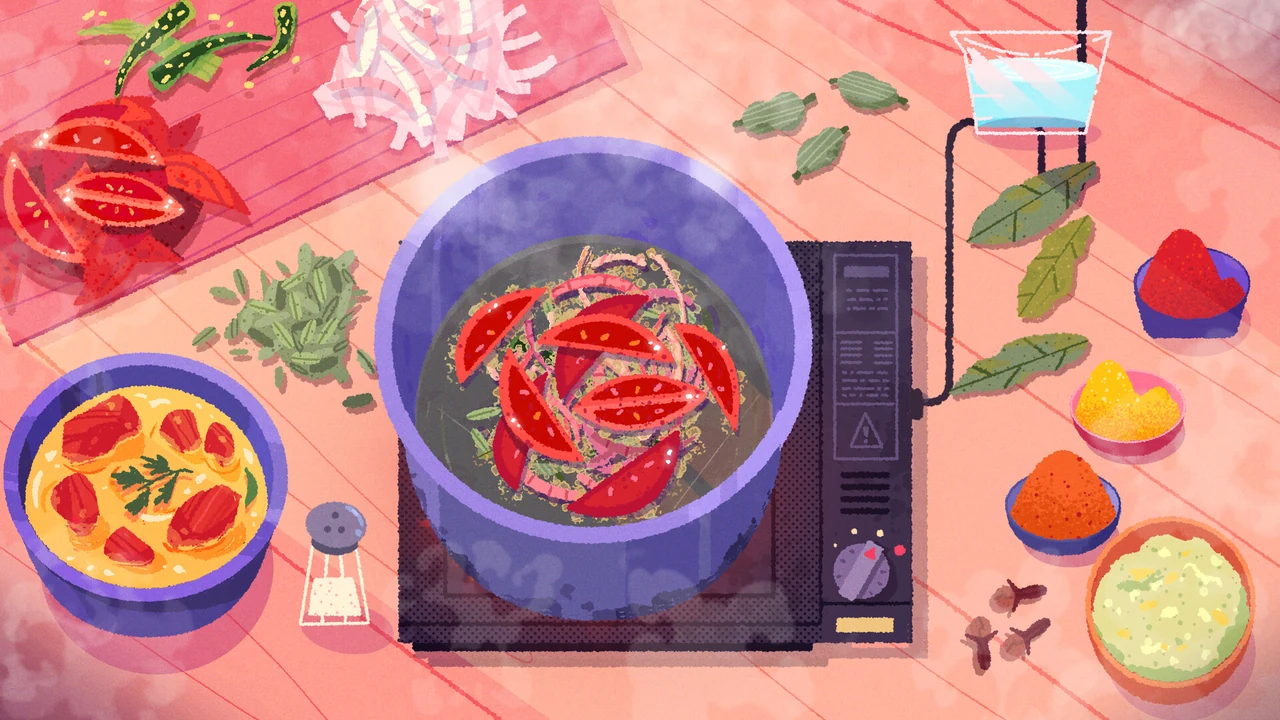
Venba's identity depends on being specific about food and culture. The game names regional South Indian dishes and identifies a soundtrack inspired by Tamil music, while the illustrations use warm colours and strongly shaped ingredients to make preparation legible. Our presentation score rewards how these elements reinforce the family's story rather than functioning as a generic backdrop. A recipe puzzle can encourage attention to a technique, but the game should not be treated as a comprehensive cooking course or an account of every immigrant family's experience. It tells a particular story through selected moments. That focus is its strength: the everyday act of preparing food becomes a way to notice relationships, memory and changes that might be less tangible in a conventional dialogue scene.
Choose a story, not a cooking career
Venba is a good match when you want the pleasure of solving a small practical problem to support a larger personal story. It is less suitable if your ideal cooking game is a long progression of upgrades, demanding service shifts or an endlessly expanding collection of recipes. Our comparatively low reasons-to-return score reflects that distinction, not a judgement that a contained story has less value. Repetition is not the purpose of every game. Unpacking offers a useful comparison within this catalogue: both turn domestic activity into storytelling, but Unpacking works through possessions and placement rather than cooking instructions and family conversations. Choose Venba when the connection between food, language and cultural memory is the part that most interests you. Recovering recipes connects the cooking puzzles directly to a family's memory and changing circumstances.
The verdict
A compact cooking story that uses missing recipe instructions to explore family and cultural memory. Recovering recipes connects the cooking puzzles directly to a family's memory and changing circumstances.
Reasons to play
- Cooking and family storytelling support one another
- Damaged recipes provide a concrete puzzle premise
- Food, music and illustration establish a specific cultural setting
Reasons to think twice
- A deliberately contained story offers limited systemic replay
- Not a restaurant-management or elaborate cooking-simulation game
See the game

Assist & accessibility
Explore the available settings and control options on the official game page before choosing your setup.
Parents’ guide
Players: Single-player. No in-game purchase marker in the checked Steam listing. Separate downloadable content may be sold.
Age classification: 7. Nintendo Switch edition; not a separate PC classification
A useful starting tip
Read the missing recipe steps as clues about order and technique rather than guessing ingredients at random.
A different direction
Compare this with Katana ZERO: A tense, concentrated story that makes the timing of a response part of how a character expresses resistance or restraint.
Official sources
Reviewed: November 2026
You might also like
 Katana ZERORead review →
 PentimentRead review →
 WildermythRead review →