A QUESTLARK CHAPTER
Hades
A strong choice for relationships in instalments, where gifts and repeated attention create a personal route through the household.
Game facts
- Developer
- Supergiant Games
- Publisher
- Supergiant Games
- Released
- 17 September 2020
- Platforms
- Windows · macOS (Steam edition)
- Model
- Paid game
- PEGI
- 12 — Nintendo Switch edition; not a separate PC classification
- Players
- Single-player
- Length
- Medium
- Difficulty
- 4 / 5 · Challenging
- Steam Deck
- Verified
PEGI source ↗ · Steam Deck status source ↗
Edition: Base game
The score, explained
The interest and responsiveness of the core decisions and actions.
How progression, exploration and goals fit together.
The coherence of the visual, musical and narrative presentation.
How clearly the game explains its rules and offers useful ways to engage.
The depth of optional goals, alternative approaches and reasons to return.
Decide what a return should accomplish
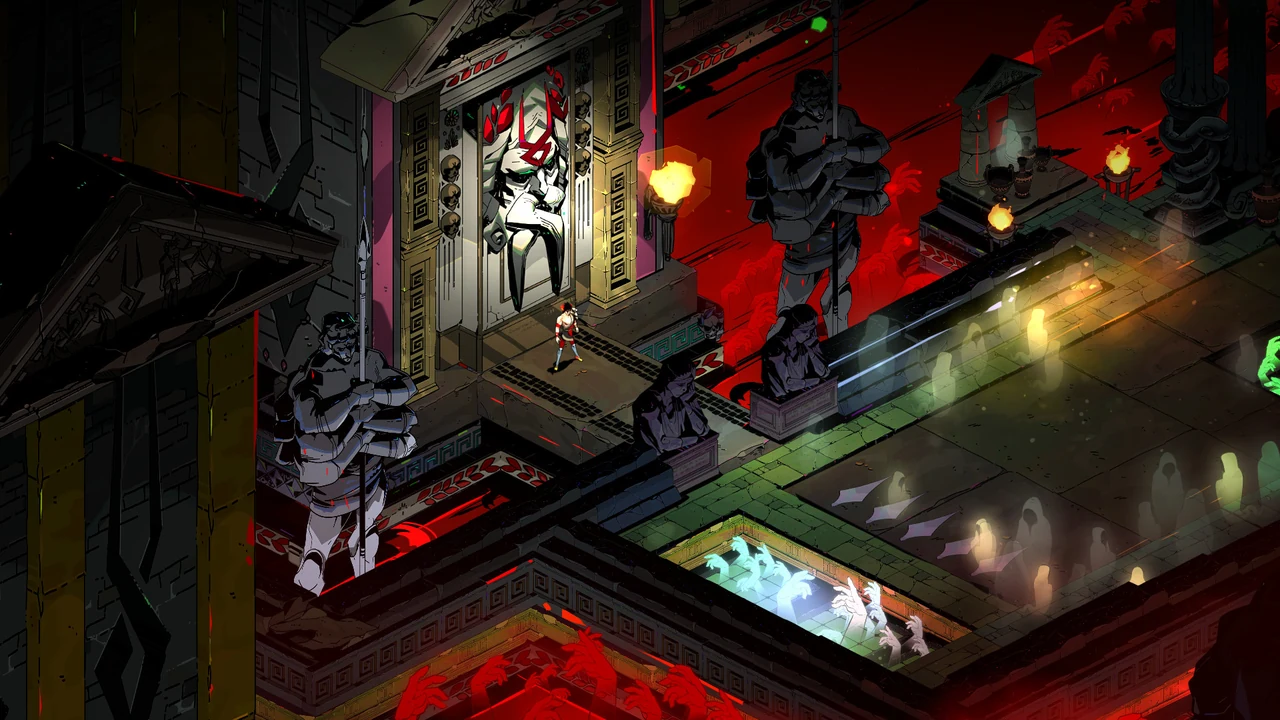
An unsuccessful escape in Hades does not send Zagreus back to an empty starting screen. The House contains people to speak with, gifts to consider and improvements that can influence the next attempt. That creates a useful choice for a player following relationships: which conversation matters now, and which person deserves attention before leaving again? The answer can change as familiar figures reveal another concern or react to recent events. Quest Lark's interest lies in that small-scale agency. The broad direction of the story is authored, but the player's attention determines how its relationships are encountered. A return can be an opportunity to pursue someone else's thread rather than merely a pause before repeating the same physical challenge through the Underworld.
Gifts make attention tangible
Nectar gives a relationship decision a visible action, and keepsakes connect some of those choices to the equipment taken on an escape. This is a persuasive link between caring about a character and remembering them during play. The gods' boons create another social texture: accepting an offer brings a voice and personality into the run, while encounters can reveal the friction among divine relatives. The game avoids making all interaction a long formal conversation. A brief greeting, a changed response or a new possibility at home can carry the relationship forward. That compactness suits repeated play. The player can keep a particular person in mind while still adapting weapons and boons to the opportunities of the next escape attempt.
Patience is part of following a relationship
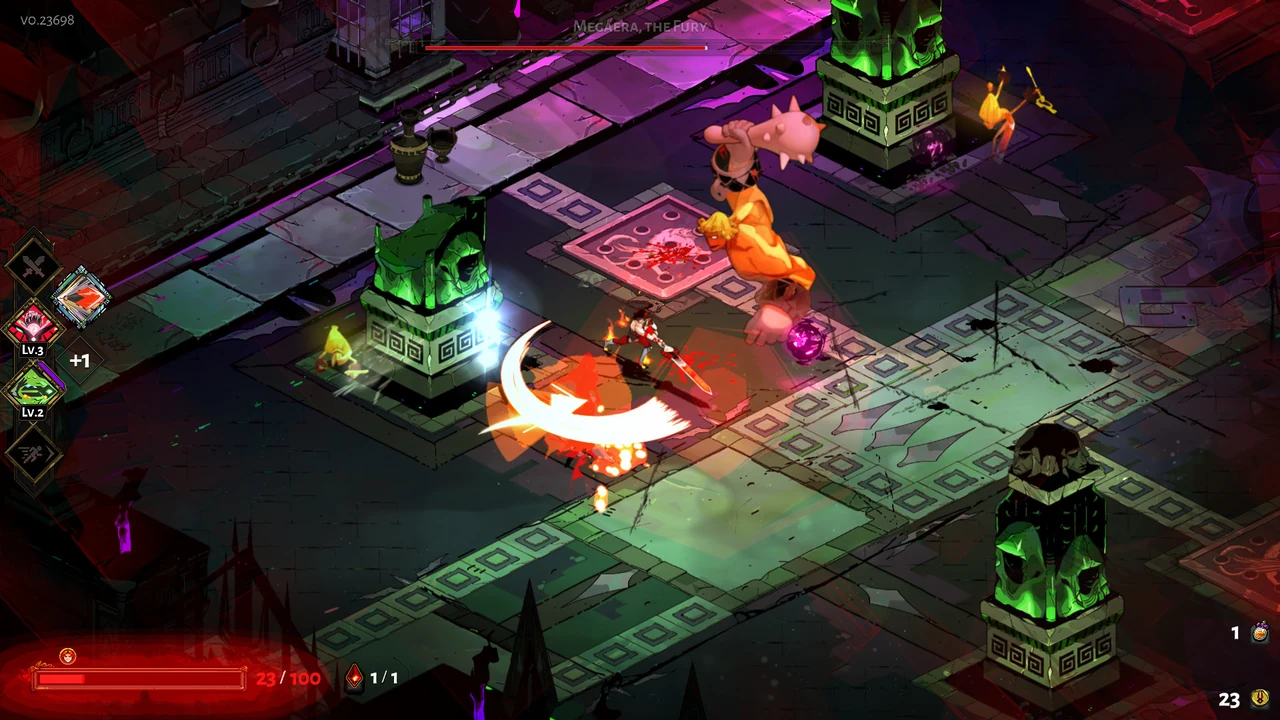
The stories do not all advance whenever the player wants them to. Conversations depend on events and repeated visits, and a particular thread may wait while other characters have something to say. That can make the pace feel pleasantly organic or frustratingly indirect. There is also no route around the substantial action-game commitment: reaching new situations requires fighting, dodging and learning enemy patterns. Someone who wants a dialogue-led relationship game should weigh that demand carefully. Hades offers abundant character writing, but it is woven into a structure that expects repeated mechanical participation. Its relationship choices are most satisfying when the time spent between conversations also has value, giving the next exchange the feeling of a welcome return rather than a reward withheld behind another combat task.
A good fit for relationships in small instalments
Hades earns a place in a choices-focused selection through the way it lets attention accumulate. Choosing a gift or checking on a familiar resident is a modest decision, yet repeated care creates a personal route through the wider cast. The game's strongest fit is a player who likes returning to people over time and can enjoy an action challenge between those meetings. It provides less direct control over the overall plot than a branching adventure, so approach it for relationships and changing context rather than for radically different story paths. The rewarding question is what a familiar person might say after the latest attempt, and whether that small exchange changes which relationship you want to pursue when Zagreus comes home again.
The verdict
A strong choice for relationships in instalments, where gifts and repeated attention create a personal route through the household.
Reasons to play
- Gifts make relationship priorities tangible
- Brief exchanges suit repeated visits
- Keepsakes connect people to an escape
Reasons to think twice
- Threads do not advance entirely on demand
- Substantial combat sits between conversations
See the game
Assist & accessibility
Parents’ guide
Players: Single-player. No in-game purchase marker in the checked Steam listing. Separate downloadable content may be sold.
Age classification: 12. Nintendo Switch edition; not a separate PC classification
A useful starting tip
Choose boons that support the weapon and effects already defining the run, rather than treating each offered power as an isolated upgrade.
A different direction
Compare this with Pentiment: An exceptional choice-led investigation that takes incomplete judgement seriously and leaves its consequences with a living community.
Official sources
Reviewed: November 2026
You might also like
 Katana ZERORead review →
 PentimentRead review →
 WildermythRead review →